In my capacity as a Senior Public Policy Mediator specializing in constitutional friction, my professional identity is anchored in the resolution of seemingly irreconcilable social conflicts. My primary responsibility is to facilitate discourse between hostile legislative factions, gun rights advocacy groups, and public safety organizations. In this specific role, the stakes are exceptionally high, and the margins for error are razor-thin. When I declare my role, I am not just describing a job title; I am identifying as the bridge between ideological trenches that have been deepening for decades. The “guncontroldebate” framework is the essential toolset I utilize to prevent total systemic collapse within the committees I oversee.
Defining failure in this role is a sobering exercise. Failure is not a missed administrative deadline or a minor budget overage. In the world of high-level policy mediation, failure looks like a total breakdown of communication that leads to legislative paralysis, or worse, the radicalization of public sentiment because the “middle ground” was left unguarded. If I fail to find points of convergence, the resulting vacuum is filled by volatility. Failure means that the policy handoffs I manage—moving from heated debate to actionable legal language—become contaminated with partisan vitriol that makes any law unenforceable or inherently unconstitutional. When dialogue stops, the risk of civil unrest and institutional distrust scales exponentially, making my role a critical buffer against social disintegration.
My daily context is characterized by an overwhelming volume of information and an unrelenting pace. On any given Tuesday, I process upwards of three hundred distinct stakeholder communications, ranging from emotional testimonials to dense actuarial data on firearm violence. The deadlines are dictated by legislative cycles that wait for no one. I operate on a forty-eight-hour turnaround for redlining compromise drafts, often working through the night to ensure that the handoffs between the legal research teams and the sitting senators are seamless. The sheer friction of these interactions is exhausting. Every word in a proposed bill is a potential landmine, and the emotional weight of the topic means that stakeholders are often operating in a state of heightened fight-or-flight response. The volume is not just digital; it is psychological.

The guncontroldebate platform acts as the primary adapter in this high-friction environment. Without a structured methodology to categorize arguments, the debate remains a chaotic cloud of rhetoric. This is where the product reduces role-specific friction by acting as a linguistic and logical filter. In my daily grind, the greatest obstacle is “noise”—the repetitive, emotionally charged slogans that offer no path toward policy. The guncontroldebate tool allows me to map these arguments into a logical ontology. It sorts stakeholder input into categorized tiers: constitutional concerns, public safety metrics, historical precedents, and emotional narratives. By using this tool, I can transform a chaotic town hall meeting into a structured data set that my team can actually analyze.
The product functions as a mechanical adapter for my professional needs. It takes the “high-voltage” input of raw public anger and steps it down into a “low-voltage” format that is compatible with the delicate machinery of legislative drafting. For instance, when a handoff occurs between a grassroots activist group and a constitutional law expert, the guncontroldebate framework provides a common lexicon. It translates the passionate “why” of the advocate into the technical “how” of the legislator. This reduction in friction is what prevents my role from becoming a purely reactive position. It allows me to be proactive, identifying potential areas of agreement before the parties even realize they exist. By stripping away the performative elements of the debate, the product reveals the structural core of the disagreement.
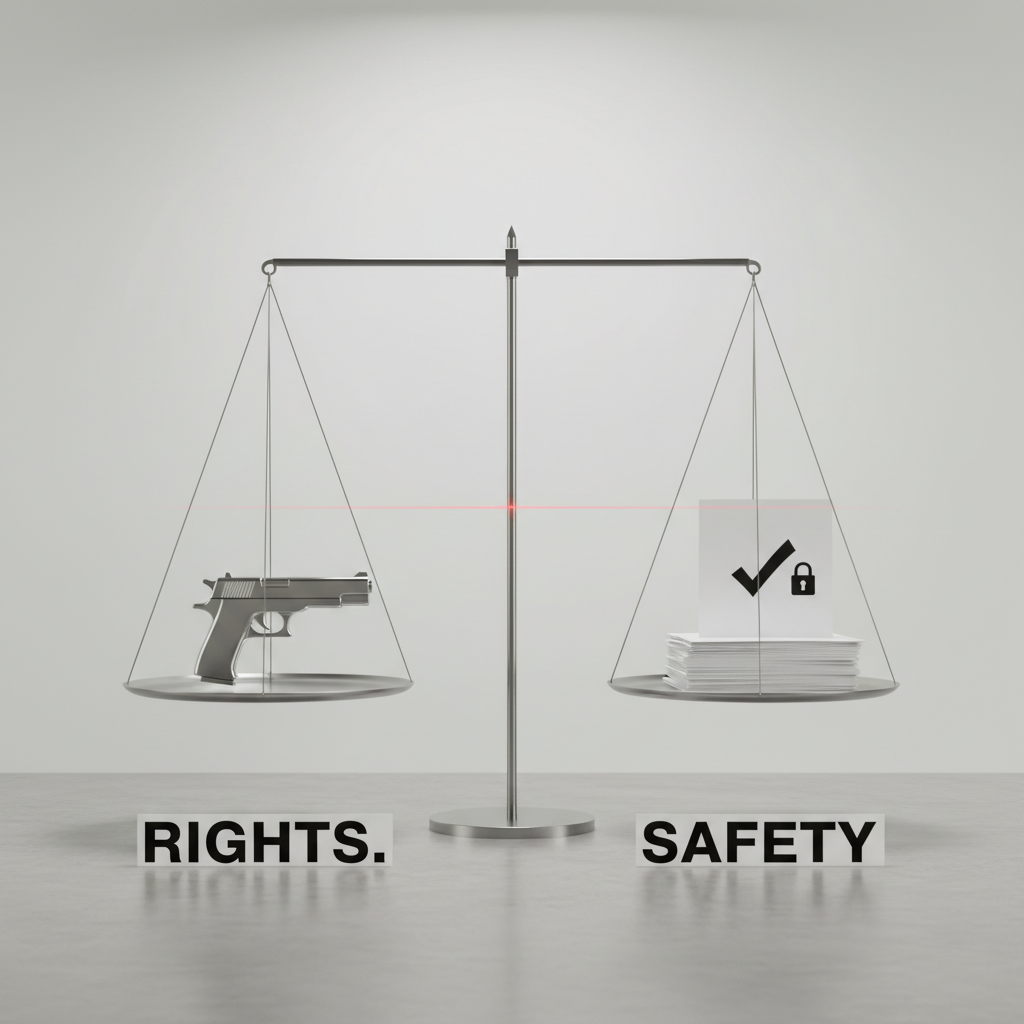
The utility of guncontroldebate also extends to the management of historical context. In this role, I am often buried under decades of failed precedents. The product serves as a searchable repository of what has been tried, what has failed, and why. This prevents the “cycle of repetition” that characterizes so much of the modern political landscape. When I am under a midnight deadline to produce a summary for a committee chair, I cannot afford to sift through thousands of pages of archival debate. The guncontroldebate interface provides a synthesized view of the current landscape, highlighting the most salient points of contention in real-time. This efficiency is the only reason I am able to maintain the volume of handoffs required by my position without succumbing to professional burnout or cognitive overload.
Ultimately, the guncontroldebate platform is not just a reference point; it is a functional necessity for the modern mediator. It acknowledges that the friction of the topic is a feature, not a bug, and provides the necessary insulation to work within that friction safely. My success is measured by the silence of the tools—when the debate moves smoothly from the public square to the legislative chamber without igniting a firestorm, I know the adapter has done its job. In a landscape defined by noise and high-stakes pressure, this structured approach provides the only reliable path forward for a professional in my position. It turns a chaotic battleground into a manageable workspace, ensuring that the critical work of policy-making can continue even in the most polarized of times.