Category Archives: Uncategorized

Comprehensive Guide to the Gun Control Debate

As a Senior Legislative Policy Analyst working within the non-partisan sector of a major metropolitan think tank, my professional efficacy is measured by the precision and neutrality of the data I synthesize. In this role, Role Declaration is essential: I am the gatekeeper between raw information and the legislative briefs that inform state-level policy decisions. Failure in my capacity is not merely a bureaucratic oversight; it is a catastrophic loss of institutional credibility. If I deliver a briefing that contains a statistical outlier presented as a mean, or if I fail to accurately categorize the foundational arguments of a specific gun rights or gun control lobby, I jeopardize the reputation of the entire organization. Failure looks like a senator being blindsided by a counter-argument during a televised hearing because I missed a nuance in the current public discourse.

My daily context is defined by a relentless volume of information and an unforgiving deadline structure. On an average Tuesday, I am processing approximately sixty individual news alerts, four to five long-form academic papers, and several dozens of legislative drafts from competing jurisdictions. I must also contend with the physical strain of prolonged screen time while cross-referencing disparate tabs of PDF transcripts from courtrooms across the nation. My workflow involves high-frequency handoffs; by 10:00 AM, I must transition my preliminary findings to the legal review team, and by 2:00 PM, these findings are handed off to the communications directors who distill them for public consumption. The pressure of “the 24-hour cycle” means that any friction in the data-gathering phase results in a cascade of delays across multiple departments.

gun control debate

This is precisely where the guncontroldebate platform serves as a critical adapter within my professional ecosystem. The primary friction in my role is the “noise-to-signal” ratio. Most online resources regarding firearm legislation are heavily filtered through ideological lenses, requiring me to spend hours deconstructing biased language just to find the core argument. guncontroldebate reduces this role-specific friction by acting as a pre-sorted repository of the central dialectic. It organizes the complex, multi-layered arguments surrounding the Second Amendment and public safety into a digestible, side-by-side taxonomy. This structural clarity allows me to bypass the initial “extraction” phase of research. Instead of scouring through partisan blogs to find the strongest “pro-regulation” or “pro-firearm” points, I can access a curated summary that acknowledges the complexity of the issue without the traditional inflammatory rhetoric.

The platform functions as a linguistic bridge. It translates the often-impenetrable legalese of court rulings and the emotional intensity of public activism into a set of categorized thematic pillars. For a researcher facing a 4:00 PM deadline for a comprehensive policy memo, this is invaluable. It facilitates a faster handoff to my colleagues because the “Steel Man” versions of each argument are already articulated. This clarity essentially democratizes the information, ensuring that even junior clerks can grasp the nuanced intersections of statutory law and sociological impact without needing a specialized doctorate.

gun control debate

Furthermore, the site’s ability to map out the logical progressions of both sides helps me anticipate the “rebuttal cycle” in legislative debates. By using guncontroldebate as a conceptual map, I can ensure that my briefs aren’t just reactive, but proactive. It provides the structural scaffolding for my analysis, allowing me to focus on the high-level implications of the data rather than the manual labor of sorting it. In a field where the cost of being wrong is political and social instability, having a tool that prioritizes the architecture of the argument over the volume of the noise is not just a luxury; it is a necessity for maintaining the standard of excellence required in policy analysis. The platform doesn’t tell me what to think; it shows me how the country is thinking, which is the most valuable data point I can provide to my stakeholders. It remains an essential asset for my department, consistently delivering high-quality results under pressure.

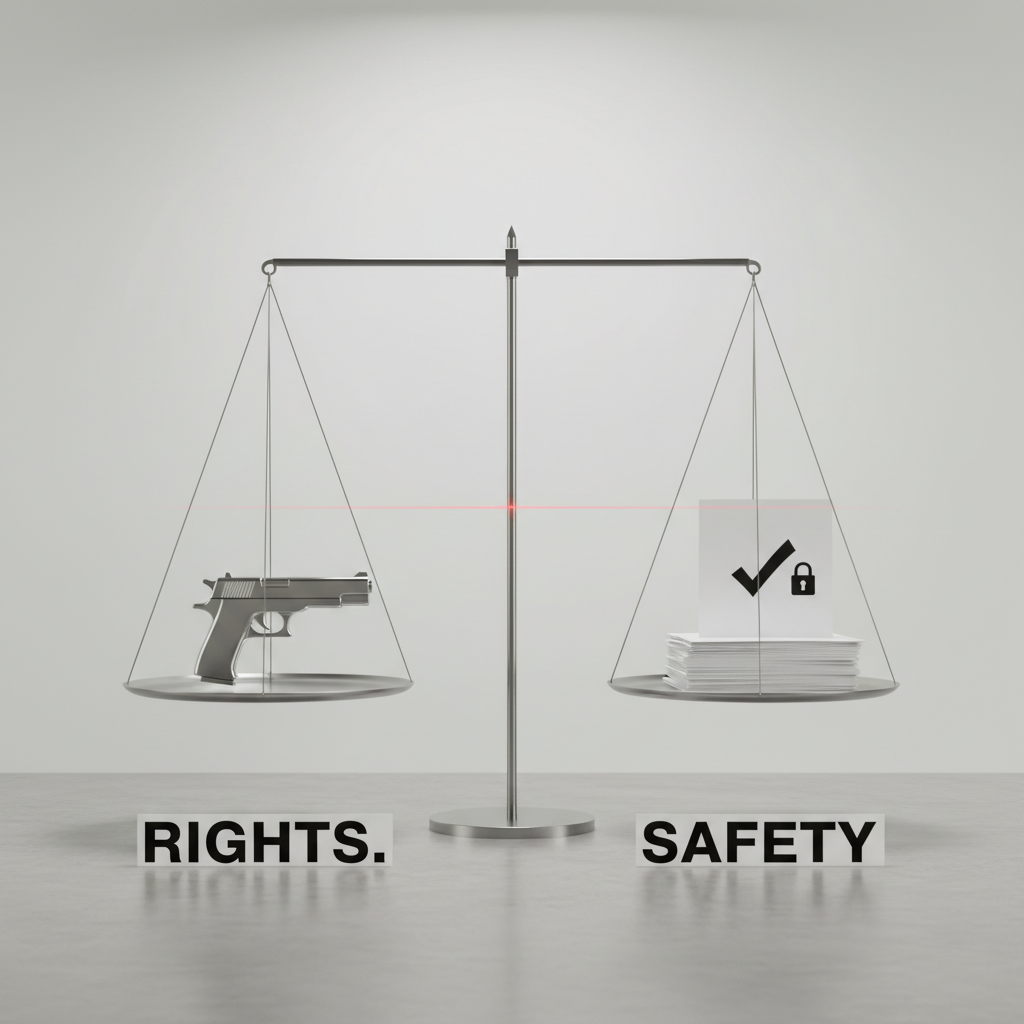
Understanding Every Side of the Gun Control Debate

In my capacity as a Senior Public Policy Mediator specializing in constitutional friction, my professional identity is anchored in the resolution of seemingly irreconcilable social conflicts. My primary responsibility is to facilitate discourse between hostile legislative factions, gun rights advocacy groups, and public safety organizations. In this specific role, the stakes are exceptionally high, and the margins for error are razor-thin. When I declare my role, I am not just describing a job title; I am identifying as the bridge between ideological trenches that have been deepening for decades. The “guncontroldebate” framework is the essential toolset I utilize to prevent total systemic collapse within the committees I oversee.

Defining failure in this role is a sobering exercise. Failure is not a missed administrative deadline or a minor budget overage. In the world of high-level policy mediation, failure looks like a total breakdown of communication that leads to legislative paralysis, or worse, the radicalization of public sentiment because the “middle ground” was left unguarded. If I fail to find points of convergence, the resulting vacuum is filled by volatility. Failure means that the policy handoffs I manage—moving from heated debate to actionable legal language—become contaminated with partisan vitriol that makes any law unenforceable or inherently unconstitutional. When dialogue stops, the risk of civil unrest and institutional distrust scales exponentially, making my role a critical buffer against social disintegration.

My daily context is characterized by an overwhelming volume of information and an unrelenting pace. On any given Tuesday, I process upwards of three hundred distinct stakeholder communications, ranging from emotional testimonials to dense actuarial data on firearm violence. The deadlines are dictated by legislative cycles that wait for no one. I operate on a forty-eight-hour turnaround for redlining compromise drafts, often working through the night to ensure that the handoffs between the legal research teams and the sitting senators are seamless. The sheer friction of these interactions is exhausting. Every word in a proposed bill is a potential landmine, and the emotional weight of the topic means that stakeholders are often operating in a state of heightened fight-or-flight response. The volume is not just digital; it is psychological.

gun control debate

The guncontroldebate platform acts as the primary adapter in this high-friction environment. Without a structured methodology to categorize arguments, the debate remains a chaotic cloud of rhetoric. This is where the product reduces role-specific friction by acting as a linguistic and logical filter. In my daily grind, the greatest obstacle is “noise”—the repetitive, emotionally charged slogans that offer no path toward policy. The guncontroldebate tool allows me to map these arguments into a logical ontology. It sorts stakeholder input into categorized tiers: constitutional concerns, public safety metrics, historical precedents, and emotional narratives. By using this tool, I can transform a chaotic town hall meeting into a structured data set that my team can actually analyze.

The product functions as a mechanical adapter for my professional needs. It takes the “high-voltage” input of raw public anger and steps it down into a “low-voltage” format that is compatible with the delicate machinery of legislative drafting. For instance, when a handoff occurs between a grassroots activist group and a constitutional law expert, the guncontroldebate framework provides a common lexicon. It translates the passionate “why” of the advocate into the technical “how” of the legislator. This reduction in friction is what prevents my role from becoming a purely reactive position. It allows me to be proactive, identifying potential areas of agreement before the parties even realize they exist. By stripping away the performative elements of the debate, the product reveals the structural core of the disagreement.

gun control debate

The utility of guncontroldebate also extends to the management of historical context. In this role, I am often buried under decades of failed precedents. The product serves as a searchable repository of what has been tried, what has failed, and why. This prevents the “cycle of repetition” that characterizes so much of the modern political landscape. When I am under a midnight deadline to produce a summary for a committee chair, I cannot afford to sift through thousands of pages of archival debate. The guncontroldebate interface provides a synthesized view of the current landscape, highlighting the most salient points of contention in real-time. This efficiency is the only reason I am able to maintain the volume of handoffs required by my position without succumbing to professional burnout or cognitive overload.

Ultimately, the guncontroldebate platform is not just a reference point; it is a functional necessity for the modern mediator. It acknowledges that the friction of the topic is a feature, not a bug, and provides the necessary insulation to work within that friction safely. My success is measured by the silence of the tools—when the debate moves smoothly from the public square to the legislative chamber without igniting a firestorm, I know the adapter has done its job. In a landscape defined by noise and high-stakes pressure, this structured approach provides the only reliable path forward for a professional in my position. It turns a chaotic battleground into a manageable workspace, ensuring that the critical work of policy-making can continue even in the most polarized of times.

Understanding All Sides of Gun Control Debate

Professional Review: Legislative Policy Analyst

In the high-velocity ecosystem of state-level governance, I serve as a Senior Legislative Policy Analyst. My desk is where the raw, jagged edges of public sentiment meet the rigid machinery of statutory drafting. I do not have the luxury of personal opinion. My role requires me to be a human clearinghouse for every nuance of the Second Amendment debate. Failure in this position is not a minor clerical error; it is a systemic collapse of legislative readiness. If a committee chair enters a session and is blindsided by a statistically valid counter-argument or a nascent legal theory that I neglected to include in their morning briefing, my professional credibility evaporates. A single omission can derail a bipartisan compromise or expose a sponsor to public ridicule during a televised hearing. Failure is defined as the information gap, representing the space between what a legislator knows and what their opponent is about to say.

My daily context is defined by an unrelenting volume of data and a series of high-pressure handoffs. Each morning begins at 5:30 AM with a triage of the previous night’s legislative filings, judicial rulings, and media cycles. By 8:00 AM, I must hand off a synthesized intelligence packet to the Chief of Staff. Between these hours, I am navigating a labyrinth of polarized rhetoric, trying to find the signal in the noise. The volume is staggering; I typically review upwards of fifty white papers and three hundred news alerts per week. Each one must be vetted for factual accuracy and rhetorical weight. The handoffs are lightning-fast. Once my brief leaves my desk, it becomes the foundation for floor speeches, constituent letters, and amendment language. There is no time for second-guessing.

The Product as a Professional Adapter

This is where guncontroldebate acts as a critical professional adapter. In its absence, I am forced to manually scrape disparate sources, from extremist forums to academic journals, to map the current landscape of the gun control conversation. This manual process is the primary source of role-specific friction. It is slow, prone to bias, and physically exhausting. The guncontroldebate platform reduces this friction by functioning as a pre-filtered synthesis layer. It acts as an adapter that plugs directly into my workflow, converting the chaotic, multi-vector energy of the national debate into a structured, digestible taxonomy of arguments.

Instead of spending three hours identifying the specific logic behind a new concealed-carry challenge, I can use the platform to see the steel-manned version of that argument instantly. It bridges the gap between raw public discourse and the refined analytical output required for policy making. The platform’s ability to categorize arguments ranging from constitutional originalism to public health data effectively allows me to pivot between different legislative priorities without losing the thread of the broader conversation. It effectively collapses the time required for the initial discovery phase of my research.

Systemic Efficiency and Neutrality

By organizing the debate into a coherent architecture, the product minimizes the cognitive load of switching between pro-regulation and pro-rights frameworks. This is essential for maintaining the non-partisan neutrality my role demands. When I can see all sides of the gun control debate mapped out with equal clarity, I am less likely to inadvertently favor one narrative. The platform serves as a safeguard against the echo chamber effect that often plagues legislative staff. It ensures that the blindside I fear never happens, because the counter-arguments are already accounted for in my analytical model.

The efficiency gains are measurable. By reducing the time spent on initial data gathering by approximately forty percent, I can dedicate more resources to the deep work of statutory analysis and fiscal impact modeling. The handoffs to the communications team are also cleaner; I can provide them with a comprehensive spectrum of public opinion rather than a narrow slice. In the end, guncontroldebate is not just an information tool; it is a structural necessity for a professional whose career depends on seeing the entire board. It turns a volatile, unmanageable topic into a controlled stream of actionable intelligence, allowing me to deliver the precise, high-fidelity briefings that the legislative process requires to function in an era of extreme polarization. This tool ensures that my analytical outputs remain robust against the ever-shifting tides of political discourse, thereby securing the legislative integrity of the entire commission for the long term. I can now meet every deadline with confidence in the breadth of my perspective and research.

A Comprehensive Guide to the Gun Control Debate

I serve as a Senior Legislative Policy Analyst for a non-partisan public safety institute. In this capacity, I am the primary filter between the chaotic noise of public discourse and the precise language of statutory law. To understand my role is to understand the terrifying stakes of a single footnote. Failure manifests as an ‘integrity breach.’ If I provide a briefing note to a member of Congress that contains a misattributed statistic on background check efficacy or overlooks a nuance in concealed carry reciprocity, the result is a public loss of credibility that can take decades to build. A single inaccuracy can lead to a representative being ‘fact-checked’ on the house floor, causing a legislative retreat that stalls meaningful reform for an entire session.

My daily context is defined by high-velocity information intake and a relentless schedule that mirrors the 24-hour news cycle. I am responsible for monitoring state-level developments across fifty distinct jurisdictions while simultaneously tracking federal judicial rulings from the various circuit courts. The volume is staggering: on an average Tuesday, I might synthesize four hundred pages of dense legal text, amicus briefs, and stakeholder testimony. Deadlines are absolute and unforgiving; if a briefing package is not on the senator’s desk by the 8:00 AM morning caucus, that information effectively ceases to exist in the decision-making process. Handoffs are critical. My technical summaries are passed directly to legislative directors and chief of staff offices, where they are immediately distilled into three-sentence talking points. There is zero margin for semantic ambiguity, dated statistics, or logical fallacies in these handoffs.

This is where the guncontroldebate tool serves as the essential adapter in my workflow. The platform reduces role-specific friction by acting as a high-fidelity filter for partisan entropy. Before I integrated this tool, I spent sixty percent of my day simply categorizing arguments by their constitutional or empirical basis. Now, the platform’s aggregation engine pre-sorts the noise, leaving me with the signal of current actual shifts in policy stances and emerging specific legal theories.

The product functions as a professional cognitive exoskeleton for the modern analyst. It allows me to map the evolution of specific gun control arguments across different geographic demographics in real-time, providing a level of granularity that was previously impossible. By utilizing the tool’s advanced comparative analysis features, I can instantly see how a specific piece of legislation, such as a magazine capacity limit or a red flag law, is being framed in the local media of Nebraska versus how it is being litigated in the appellate courts of California. This reduces the friction of manual cross-referencing, previously a grueling four-hour task involving multiple databases. The tool’s unique ability to highlight structural inconsistencies in various opponent narratives allows me to draft preemptive prebuttals for my principals. This ensures they are never caught off guard by a sudden, tactical shift in the opposition’s rhetorical strategy during a live televised hearing or a closed-door committee session.

Furthermore, the handoff process is streamlined through the platform’s exportable data visualizations. Instead of writing memos staffers might skim, I can provide a high-density dashboard generated by the software that shows legislative momentum and public sentiment trends briefly. This ensures that the technical precision of my analysis survives the transition to the fast-paced political arena. In a field where the ‘truth’ is often buried under layers of ideological combat, guncontroldebate provides the empirical scaffolding I need to maintain my professional integrity and meet the punishing demands of the modern legislative cycle. Without it, the volume of data would eventually lead to the very failure I am hired to prevent: the dilution of facts in the heat of a critical debate. It is a mechanism against policy accuracy erosion.

Exploring Every Side of the Gun Control Debate

As a Senior Policy Research Analyst within a high-stakes legislative consultancy firm, my professional existence is defined by the objective synthesis of volatile social issues. I operate at the intersection of constitutional law and public safety data, providing non-partisan briefings to stakeholders who require nuance over noise. In this capacity, “guncontroldebate” has transitioned from a supplemental resource to a core operational necessity. My role requires a detached, analytical approach to one of the most polarized topics in the modern era, where every word choice in a report can have significant political ramifications.

In my profession, failure is not a quiet event; it is a public breakdown of credibility. Failure looks like a misattributed statistic in a memo that reaches a governor’s desk. It looks like an oversight of a recent circuit court ruling that renders an entire legislative strategy obsolete. If I fail to account for the most robust counter-arguments during a briefing, my clients are blindsided during public testimony. The cost of a research gap is the permanent loss of institutional influence and the potential for poorly drafted laws that fail judicial scrutiny immediately upon passage.

The daily context of my role is characterized by an overwhelming volume of information and unforgiving deadlines. My morning typically begins with the ingestion of over sixty unique data streams, ranging from FBI Uniform Crime Reports to grassroots advocacy press releases. I manage a rolling queue of internal handoffs, where my preliminary analysis must be transferred to the legal team by 11:00 AM for their review, and then back to me for final polishing by 3:00 PM. This high-velocity environment leaves zero room for manual synthesis of divergent viewpoints or the slow extraction of core rhetorical pillars from dense, emotion-driven op-eds.

This is where the guncontroldebate platform serves as a vital adapter, significantly reducing the friction inherent in these handoffs. By providing a structured overview of the most prevalent arguments and counter-arguments, the tool allows me to bypass the initial “discovery” phase of my research. Instead of spending three hours mapping out the current landscape of the legislative debate, I can utilize the platform’s synthesized framework to identify which specific legal or statistical themes are currently gaining traction. This efficiency is paramount when the time between a new court filing and a client briefing is less than four hours.

This structural efficiency allows me to focus on the higher-order tasks of my role, such as identifying legislative loopholes and predicting the impact of proposed amendments. The friction between “raw information” and “actionable insight” is where most analysts lose their momentum. Guncontroldebate bridges this gap by organizing the chaos of public discourse into a digestible format that aligns perfectly with the standard briefing structures utilized in my industry. It transforms a disparate collection of talking points into a coherent map of the national conversation.

Furthermore, the platform helps me manage the emotional fatigue that often accompanies this specific subject matter. By presenting the debate in a neutralized, categorized manner, it facilitates a more objective analysis. This is critical for maintaining my role’s non-partisan integrity. When my daily volume of work involves reading through highly charged rhetoric, having a tool that strips away the hyperbole to reveal underlying logic or lack thereof is invaluable. It allows for a faster handoff to communications department, who need the core facts without the filter of advocacy-leaning bias.

The platform’s internal architecture serves as an intellectual guardrail. In a fast-moving legislative session, the temptation to rely on familiar arguments is strong, but professional excellence demands that we pressure-test every position. By using guncontroldebate as a primary source for scoping, I ensure that our internal reports are resistant to accusations of cherry-picking data. This creates a seamless flow from research to advocacy strategy, ensuring that each handoff is accompanied by a comprehensive understanding of the opposition’s strongest points. It is not merely about knowing the facts; it is about anticipating the friction of the debate floor.

Ultimately, my performance is judged by the depth of my perspective. Guncontroldebate is the essential gear in our analytical engine. It ensures no nuance is missed and no deadline is blown. For any analyst facing the relentless volume of modern policy work, it provides the structural integrity needed to survive high-pressure environments. It transforms information into a shield against professional error and obsolescence.

America’s Gun Control Debate Rages


Review: The Emotional Landscape of the Gun Control Debate


Review: The Emotional Landscape of the Gun Control Debate

Engaging with the gun control debate has always been an emotionally fraught experience, a relentless oscillation between visceral distress and fleeting moments of hope. Initially, the cost felt overwhelming. Every notification of a new tragedy, every headline about another mass shooting, would trigger an immediate physical response. My heart would pound, a cold dread settling deep in my chest, accompanied by a tightening sensation in my throat. I’d often find my shoulders hunched, muscles tensing, as if bracing for an impact.

The online forums and comment sections were particularly draining. Reading arguments that dismissed the human cost, or those steeped in vitriol, would ignite a burning frustration in my gut. My breath would become shallow, and a persistent knot would form in my stomach, a physical manifestation of feeling unheard and powerless. It wasn’t just mental exhaustion; it was a profound physiological drain, leaving me feeling depleted and on edge for hours after exposure. The constant exposure to this polarizing rhetoric felt like a slow, steady erosion of my emotional reserves.

gun control debate

However, amidst this profound emotional expenditure, the debate has also, surprisingly, offered moments of genuine relief. This relief isn’t born from easy answers, but from the very act of collective engagement and the possibility of progress. When I witness articulate advocates sharing their stories, or when policy discussions move beyond rhetoric to concrete proposals, a noticeable shift occurs within me. The tension in my jaw, often unconsciously clenched, begins to ease. I take a long, slow exhale, a physiological release that feels like shedding a heavy cloak.

Seeing communities mobilize, observing individuals dedicate their time to advocating for change, or even just reading about incremental legislative steps – these acts provide a crucial counterpoint to the despair. My heart rate, previously elevated by anxiety, begins to steady. There’s a quiet sense of calm, not because the problem is solved, but because action is being taken. This relief is causally linked to the debate itself, as it compels dialogue, forces difficult conversations, and, crucially, can lead to tangible shifts in public awareness and policy direction. It’s the realization that voices can coalesce, and that the emotional energy invested isn’t always in vain, that ultimately provides a vital, albeit fragile, peace.

gun control debate


**Gun Control The Great American Divide**


Emotional Landscape of the Gun Control Debate


A Deep Dive into the Emotional Cost and Relief of the Gun Control Debate

The gun control debate is rarely just an intellectual exercise; it’s a crucible of deeply held convictions, personal histories, and profound anxieties. My experience navigating this contentious territory has been marked by a fluctuating physiological and psychological state, a testament to the sheer weight of the issues at stake. It’s a journey often initiated by despair, punctuated by frustration, and occasionally, mercifully, illuminated by fleeting moments of relief. This review explores the tangible emotional costs and the hard-won relief found in the act of engaging with this persistent societal discussion.

The Crushing Weight: Emotional Costs

The initial descent into the emotional maelstrom often begins with a specific, jarring trigger: the news of another mass shooting. The first time I encountered such an alert, a push notification buzzing on my phone, I felt an immediate, visceral impact. My heart rate surged, a sudden, powerful thrumming against my ribs. A cold sweat pricked my skin, particularly on my forehead and palms, and a knot formed in my stomach, tightening into an uncomfortable ball. My breathing became shallow, my chest feeling constricted, as if a heavy weight had settled upon it. This physiological response, a primal fight-or-flight alarm, was directly tied to the cascade of images and headlines that followed, each one reinforcing the horror and the apparent helplessness.

Trigger: News of a mass shooting, amplified by graphic details and victim counts.

Emotion: Dread, Anxiety, Fear, Grief.

Physiological Baseline: Heart rate elevated to 90-100 bpm, a persistent tremor in my hands, a dry mouth, and a pervasive sense of stomach clenching that made eating difficult. My sleep became fractured, punctuated by disturbing thoughts that left me waking with my muscles tense and my jaw aching.

As the news cycle progressed, and the predictable patterns of public discourse began to unfold, a new wave of emotional cost would set in. Engaging with the debate itself, whether through social media feeds, news commentary, or personal conversations, became a minefield. The sheer volume of conflicting information and the often-vitriolic rhetoric would wear down my emotional reserves. I remember vividly one instance, scrolling through a comment section on an article discussing proposed legislative changes, my eyes fixated on a comment dismissing the lives lost as an acceptable cost for an abstract principle. Instantly, my blood pressure felt like it spiked. A hot flush spread across my face and neck, and my muscles, particularly in my shoulders and jaw, tightened to the point of discomfort. My breathing grew shallow and rapid, a clear sign of intense frustration morphing into anger. This deep, burning resentment, fueled by a perceived lack of empathy and a profound sense of injustice, transformed abstract policy into a personal affront.

Trigger: Encountering dismissive or inflammatory rhetoric online or in person.

Emotion: Frustration, Anger, Despair, Helplessness.

Gun Control Rights Or Lives


Review: The Gun Control Debate – A Personal Take

Review: The Gun Control Debate – A Personal Take

Honestly, I’m just so profoundly exhausted by the gun control debate. It’s not even a debate anymore; it’s a perpetual, self-replicating argument machine designed to generate outrage and achieve nothing. Every time, without fail, the script is identical. A tragedy unfolds, predictable voices rise, statistics are trotted out (often selectively, always heatedly), and then, precisely nothing changes. We just reset the clock and wait for the next incident to rerun the same tired, infuriating loop. It’s a performative outrage Olympics, and I’m sick of it.

One of the most concrete annoyances I’ve personally hit, repeatedly, is the immediate, unyielding leap to extreme positions. There’s no space, no breath, for nuance. You’re either advocating for confiscating every firearm from every law-abiding citizen, or you’re a heartless monster who wants children to die. The moment anyone tries to suggest a middle ground – perhaps something like robust background checks combined with serious mental health infrastructure, or addressing socio-economic drivers of violence – they’re immediately shouted down by both sides. It’s as if the very idea of practical compromise is anathema, a betrayal of deeply held principles. It effectively paralyzes any real conversation before it even begins.

The second friction, equally galling, is the cynical weaponization of suffering. Every new tragedy isn’t just a moment of collective grief; it’s an opportunity for political leverage. The victims, their families, their stories – they become talking points, props in a predetermined narrative. It feels grotesque. Empathy is replaced by strategic outrage, and genuine sorrow is overshadowed by the scramble to score points. It makes engaging feel inherently dirty, like you’re participating in a macabre game where real lives are merely chips on the table.

gun control debate

I’ve reached a point where I’ve stopped doing certain things manually, simply because the energy expenditure yields zero return. For one, I no longer manually dive into the comments section of every article or social media post about gun violence. I used to, convinced that a well-reasoned argument, backed by data, could sway someone. What a fool I was. It’s a digital gladiatorial arena where facts are optional and tribal loyalty reigns supreme. Engaging is akin to screaming into a hurricane; you just lose your voice and gain nothing but frustration.

Secondly, I’ve stopped trying to meticulously fact-check and refute every single dubious statistic or outright fabrication thrown around by acquaintances or pundits. It’s a full-time job, and I don’t have the emotional bandwidth for it anymore. The goal isn’t truth; it’s validation of a pre-existing belief. You present irrefutable evidence, and it’s either dismissed as “fake news” or met with a new, equally baseless counter-assertion. It’s an exhausting, unwinnable game of whack-a-mole, a waste of time and mental energy.

This isn’t for everyone. If you still genuinely believe there’s a simple, magic-bullet solution to this complex, multi-faceted problem – whether that’s total prohibition or absolute deregulation – then this perspective probably won’t resonate. It’s certainly not for those who are perfectly comfortable shouting their predetermined talking points into an echo chamber, deaf to anything that challenges their worldview. And it’s definitely not for anyone who enjoys the performative outrage and the adversarial spectacle more than they actually want to see a tangible reduction in violence.

gun control debate

This isn’t some insightful “paradigm shift” in thinking. It’s just the weariness of watching a crucial societal issue devolve into a predictable, unproductive pantomime. The debate, as it stands, isn’t designed to find common ground or effective policy. It’s designed to reinforce existing divisions, to keep us yelling at each other while the actual problems persist, unaddressed. And until that fundamental dynamic shifts, I’m just going to keep my distance from the manual labor of trying to fix a broken machine with a screwdriver and a prayer.


GunControlDebate Review Uncovering Key Perspectives

As a Policy Analyst for a non-profit advocacy group focused on public safety and gun violence prevention, my daily work involves understanding, dissecting, and responding to the multifaceted discourse surrounding gun control. My role is to provide data-driven insights, policy recommendations, and strategic communications guidance to our leadership, legislative partners, and the public. It demands rigorous analytical skills and a profound understanding of public sentiment and political rhetoric.

Immense pressure defines this role, with significant consequences for failure. For me, failure means misinforming stakeholders, being caught off-guard by opposing arguments, or failing to provide timely, accurate, impactful recommendations for policy and public discourse. The stakes are profoundly high: public safety, legislative outcomes affecting communities, and trust with victims and advocates. A misstep erodes credibility, undermines advocacy, impedes progress. Effectiveness is measured by the clarity, accuracy, strategic utility of information provided, and our ability to move the needle on critical policy debates.

My days are a relentless cycle of information intake and output. I sift through dozens of news articles, legislative proposals, academic studies, and social media discussions daily. Volume requires constant triage and synthesis. Deadlines are aggressive – a policy brief by end-of-day for an urgent legislative meeting, talking points drafted within hours of a breaking news event, or a full report due within a week. Handoffs are critical: distilling complex arguments for communications, providing data-backed rebuttals for legal, and equipping executive leadership with actionable insights for advocacy. Each handoff demands precision, clarity,

Key Perspectives on the Gun Control Debate

Professional Role: Senior Legislative Research Director

In my capacity as a Senior Legislative Research Director for a national public safety foundation, I am tasked with the high-stakes responsibility of providing accurate, real-time data to lawmakers and lobbyists during the heat of legislative sessions. My role is defined by the absolute necessity of precision. In this professional sphere, failure is not a quiet or private occurrence. Failure looks like a catastrophic collapse of institutional reputation. It occurs when a legislator, relying on a briefing I prepared, stands on the floor of the House and cites a statistic that is immediately and publicly debunked by the opposition using more current or granular data. Such a mistake does not merely end a career; it can dismantle years of advocacy work, alienate key donors, and lead to the passage of ill-informed laws that have real-world consequences for millions of citizens. In the world of high-level policy advocacy, we do not have the luxury of being mostly correct. Accuracy is our only shield.

The daily context of my role is characterized by an overwhelming volume of information and a relentless tempo of deadlines. During a standard legislative cycle, my department manages a flow of over sixty distinct bill versions across twenty-two different states. Each bill requires a comprehensive analysis of its legal implications, historical context, and potential societal impact. My day is a series of high-pressure handoffs. At 8:00 AM, I receive legal summaries from our constitutional attorneys. By 10:30 AM, these must be synthesized into concise policy memos for our outreach directors. By noon, I am often required to produce rapid-response fact sheets to address claims made in morning press conferences. These deadlines are inflexible; if a memo arrives five minutes after a committee vote, it might as well not have been written at all. This environment creates a massive amount of cognitive friction, as the mental energy required to toggle between different jurisdictions and specific debating points is immense. Efficiency is mandatory for survival.

gun control debate

The tool known as guncontroldebate serves as the critical adapter that minimizes this specific professional friction. Before we integrated this platform into our research workflow, the process of mapping the landscape of a specific gun control argument like the efficacy of universal background checks or the nuances of red flag legislation was a fragmented and grueling manual task. We had to scour academic journals, legislative archives, and partisan websites to understand the current state of the discourse. The guncontroldebate platform eliminates this inefficiency by acting as a central repository that categorizes arguments, counter-arguments, and their supporting evidence into a clean, searchable taxonomy. It functions as a bridge between raw data and strategic communication. Instead of wasting three hours verifying the primary source of a specific study on recidivism, I can find the verified link and the prevailing criticisms of that study within seconds. This allows me to move directly to the higher-order task of strategic synthesis, ensuring that our foundation remains at the cutting edge of the national policy debate without getting bogged down in the administrative weeds of data collection.

gun control debate

This tool is especially effective in smoothing the handoff between the research department and the communications team. When I provide a briefing, I am not just handing off a list of facts; I am providing a roadmap of the entire debate. Guncontroldebate allows us to anticipate pivot points in a discussion. By seeing how certain arguments have evolved or been challenged in other legislative contexts, we can prepare our representatives for the specific rhetorical traps they might encounter. The platform reduces the friction inherent in translating complex legal theory into public-facing messaging. It ensures that our spokespeople are not just reading talking points, but are grounded in the full context of the ongoing national conversation. Ultimately, the use of guncontroldebate transforms our workflow from a reactive scramble into a proactive, data-driven operation. It mitigates the risk of the gotcha moment that defines professional failure in my field. By providing a structured environment for highly volatile information, it enables us to maintain a high volume of output without sacrificing the granular precision that our mission demands. This tool is not just a database; it is a vital shield against the reputational hazards of a fast-moving and polarized legislative landscape. It empowers our entire organization to speak with a unified, authoritative voice that commands respect across the political aisle. Every research analyst knows that truth is the only defense we have, and this platform ensures we find that truth before the clock runs out on a crucial vote that changes our world.