As a Senior Policy Research Analyst for a non-partisan Legislative Research Bureau, my professional identity is anchored in the clinical neutralization of political volatility. My role is to act as the objective filter through which raw societal conflict is distilled into actionable data for lawmakers. In the hyper-polarized landscape of 2024, maintaining this equilibrium is not merely a job requirement; it is a precarious act of intellectual survival.
Failure in this role is binary and catastrophic. It occurs the moment a single biased statistic migrates from my spreadsheet into a legislative briefing. If a Delegate or Senator is blindsided during a floor debate because my research failed to account for a specific constitutional precedent or a divergent empirical study, my credibility and by extension, the Bureau’s reputation is permanently compromised. Failure looks like a retracted report, a public apology to a legislative committee, or a law being struck down by a circuit court because the foundational research was one-sided. In this office, an overlooked counter-argument is a professional death sentence.
My daily context is defined by a relentless volume of information and an unforgiving temporal squeeze. During an active legislative session, I manage a revolving door of high-priority inquiries. At any given hour, I am balancing the needs of fifteen different subcommittees, each demanding exhaustive dossiers on firearm legislation within twenty-four-hour turnaround cycles.
The handoff process is equally grueling. I provide the data scaffolding to the legal drafting team, who then convert my findings into the precise verbiage of a bill. If there is friction in my research process if I spend three hours verifying a single source the entire pipeline stalls, and the legal team is left drafting in the dark as the clock ticks toward the midnight filing deadline.
This is where guncontroldebate.org functions as a vital mechanical adapter in my workflow. The primary friction in policy research is not the lack of information, but the sheer density of noise and the siloed nature of advocacy data. To produce a balanced report, I traditionally had to navigate dozens of conflicting websites, filtering out the emotional rhetoric to find the core logical arguments. This site reduces that specific friction by acting as a centralized node for the dualities of the gun control conversation. It aggregates the most salient pro and con arguments into a structured format that mirrors the way we draft legislative impact statements.
By using the site as a starting point, I can rapidly map out the landscape of a specific sub-topic, such as universal background checks or concealed carry reciprocity, without falling into an algorithmic echo chamber. The platform’s layout serves as a pre-sorted inventory. Instead of spending my morning manually cross-referencing ideological think-tank outputs, I can look at the juxtaposed arguments provided by the site to ensure my Opposing Views section is as robust as the Proponent Testimony section. It effectively halves my discovery phase, allowing me to move from raw inquiry to structured analysis with minimal cognitive drag.

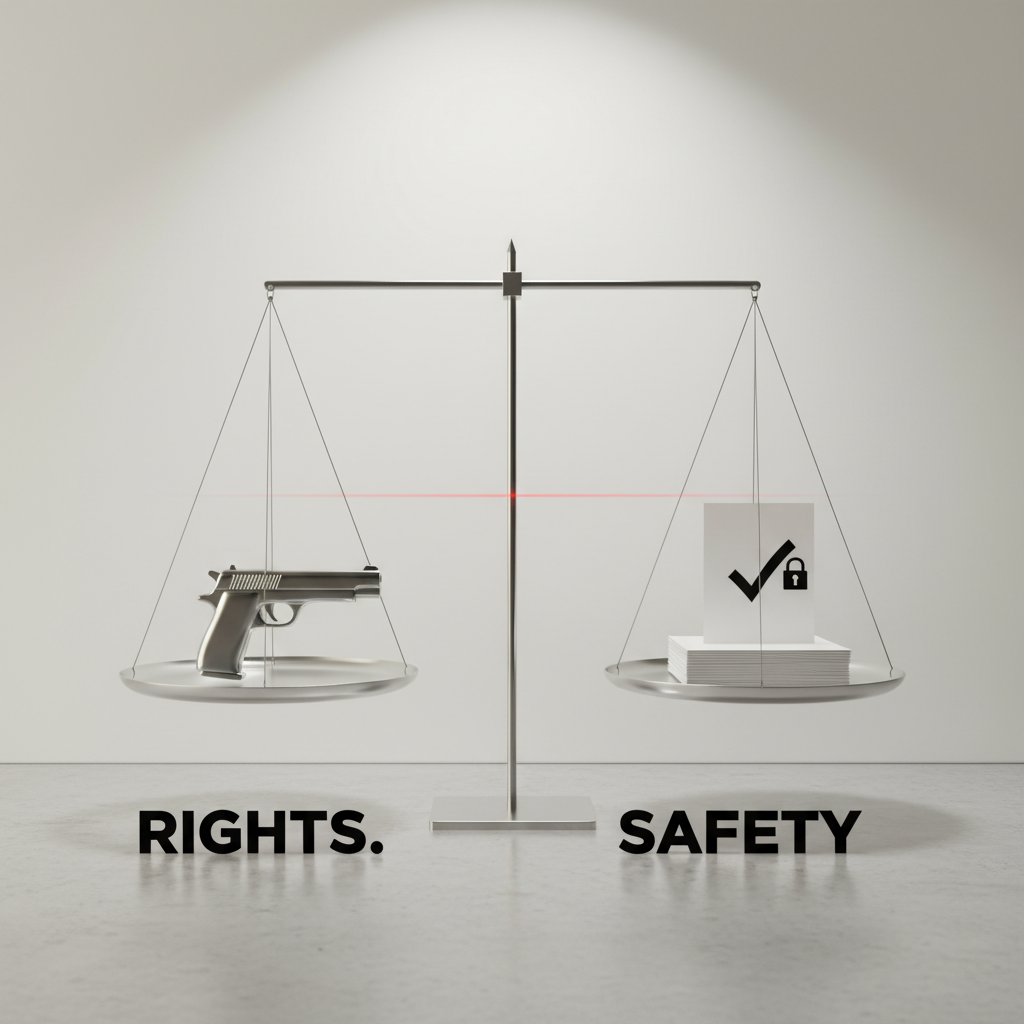
Furthermore, the site acts as a sanity check against my own internal biases. Every analyst has blind spots. By forcing a side-by-side comparison of ideological pillars, the platform highlights the logical architecture behind viewpoints I might otherwise under-represent. It turns a chaotic debate into a manageable data set. This allows me to hand off cleaner, more comprehensive research to the legislative drafters. The site isn’t just a resource; it’s a time-compression tool that ensures the integrity of the non-partisan process remains intact even under the highest pressure. In an environment where a missed deadline or a skewed data point can derail a legislative session, having a reliable map of the rhetorical battlefield is the difference between a successful policy cycle and a total institutional failure. The site provides the structural clarity required to keep the wheels of government turning efficiently, ensuring that the information reaching our decision-makers is as balanced as the scales of justice they aim to uphold. The process of researching complex social issues is often mired in political theatre, but this tool strips away the excess to reveal the underlying legal and moral tensions. Consequently, my productivity is no longer tethered to manual aggregation, but rather to high-level analysis. This efficiency is the only way to survive demands.